


History of the horticultural society reviewed at 120th anniversary event

History of the horticultural society reviewed at 120th anniversary event
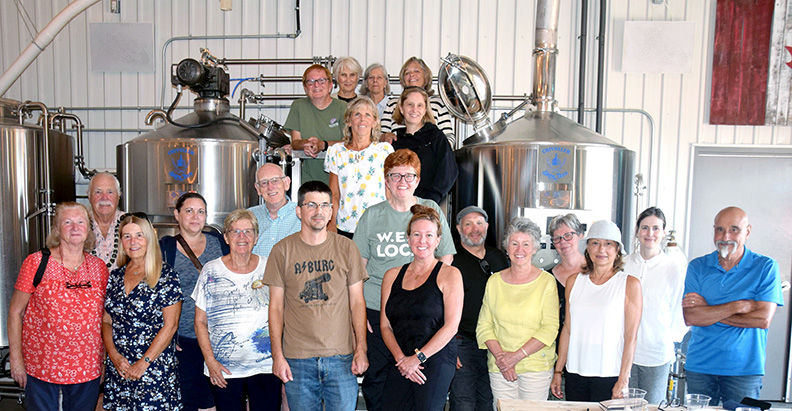
Members of the Amherstburg Horticultural Society gathered last Friday for an event that allowed them to learn more about themselves.
The horticultural society welcomed its membership to G.L. Heritage Brewing Co. July 24 to not only socialize, have a drink and a bite to eat, but to learn about the first 120 years the society has been around. Meg Reiner, collections co-ordinator with the Marsh Historical Collection, presented the history of the club to the members as part of the 120th anniversary event.
Dr. Oscar Teeter founded the Amherstburg Horticultural Society in 1906 in an effort to beautify the town. Efforts to found the society began with a letter in The Amherstburg Echo.
Prominent people of the day attended the first meeting, held in council chambers, including Mayor John Stokes and Rev. Thomas Nattress from St. Andrew’s Presbyterian Church. The initial membership fee was $1 per year, per family.
“Right from the beginning, they had 60 members,” said Reiner.
Current president Janice Emery said 2026 membership fees are $15 per person and $20 per family. There are roughly 60 members this year.
Based on Reiner’s research, the horticultural society went defunct the next year but returned in 1908. Victory Gardens were planted during World War I to support soldiers and provide vegetables for them as they fought oversees.
The year 1931 was busy with new gardens and activities, the biggest one was the first ever plant show. That was held in the General Amherst High School gymnasium. Membership that year was 231. They surpassed 300 members a few years later.
During the Great Depression, unemployed men were steered towards gardening as a way to keep active.
“Many men were taught their first lessons in horticulture,” said Reiner.
World War II saw the return of Victory Gardens, with the Calvert Rose Gardens coming in the 1940s, the latter starting out in front of the then-Calvert plant near William St. That plant would later become Seagram and finished as the Diageo plant. That garden would stretch from William St. to Alma St. with the support of the town council of the day.
Reiner outlined the projects in the 1950s, 60s and 70s, with major ones being tree plantings and the creation of rhododendron and azalea gardens. Bob Sutherland, a.k.a. “Rhodo Bob,” helped lead efforts to plant rhododendrons and azaleas in King’s Navy Yard Park and later to other locations in Amherstburg.
It was dubbed the Fort Malden Horticultural Society in the 1950s with the Amherstburg Horticultural Society again returning in recent years.
Junior Gardener competitions, Communities in Bloom efforts, reforestation projects and the 100th anniversary celebration in 2006 were also highlighted. Garden Tours were first held in 1986, with those having been held annually. The Garden Tour is now held every other year.
Current projects also include participation in the Art Crawl, National Day of Reconciliation, the Plant Sale and Deck the Planters.
“We love Amherstburg and we want to keep it beautiful like they did in 1906,” added Emery.
History of the horticultural society reviewed at 120th anniversary event
By Ron Giofu


Comments